
One Stop Apothecary Blog
Herb of the Week
Black Cohosh

Featured Discussion
Black cohosh has a long history. It also has a modern evidence problem. Traditional tissue states that indicate use, time-limited application, safety boundaries, and the liver-safety frame that must accompany any discussion of this plant.
People reach for it because hot flashes, night sweats, sleep disruption, irritability, and cycle changes can wear a person down fast. Black cohosh sounds gentler than hormone therapy. It’s sold today as “menopause support,” “hormone balance,” and, more recently, as part of “hormone reset” bundles.

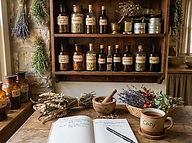


Traditional tissue states that often pointed herbalists toward black cohosh included:
-
Tension and constriction
Think tight muscles, neck tension, pelvic cramping, and a feeling of internal pressure.
-
Nervous system irritability
Restlessness, mood swings, sensitivity, poor sleep, and symptoms that flare with stress.
-
Reproductive transition symptoms with aching
Menstrual changes, menopausal transition, uterine cramping, and deep body aches.
-
Heat with agitation
Hot flashes or flushing paired with tension, irritability, or sleep disruption.
-
Dryness and depletion patterns
Some traditions used it when heat and tension appeared alongside a depleted feeling, though black cohosh was not the only herb used for that picture.
That traditional frame is more nuanced than “take this for hormones.” It asks what the symptoms feel like. Are they hot and restless? Tight and achy? Worse with stress? Paired with sleep disruption?
Herbal medicine works best when the purpose is clear:
-
The plant matches the pattern for a specific purpose.
-
The preparation matches the purpose.
-
The duration matches the safety profile.
-
The person using it has no obvious reason to avoid it.
-
Medical care stays on the table.
Join the Digital Info Group
Just $5
And you get full access to all PDF files


Heating/Cooking
Oils


Mixing/Grinding
Weighing/Measure


Containers

Cleaning
Packaging

Recent Blogs


Become a site member today
Its just $5 to join the Digital Info Members Group. You'll have access to the Members Only Page that has Herbal Formulas, Detailed Monographs of specific herbs and Step-by-Step instructions of various processes and calculations to expand your herbal knowledge base.
All Digital Info is in PDF format ready for you to download for your own digital library

Members Only Doc's
This page will provide members only documents with information about formulas, step-by-step instructions, detailed monographs etc
Daily Adaptogen Calm
Alcohol Percent By Volume calculation-Compound Glycerite
Monograph-Echinacea

Digital Info
5
Every month
Detailed photo Monographs, In Depth information, some of my herbal formulations, exclusive information and more.
Valid for 6 months
Items Currently Available to members
This list will be added to weekly.
Join Now to have access to the PDF's for your own use.
Monographs:
Echinacea
American Skullcap
Slippery Elm
Elderberry
Plantain
Milky Oat
Wild Lettuce
Solomons Seal
American Ginseng
Mullein
Nettle
Lemon Balm
Calendula
Goldenrod
Hawthorn
Wild Cherry
Bee Balm
Boneset
Witch Hazel
Passionflower
Black Cohosh
New This Week
Step-by-Step Instructions:
Compound Glycerite
Alcohol % by Volume Calculation
Percolation Tincture
Wild Lettuce extraction methods and Tincturing
Herb of the Week 3 - American Ginseng
Herb of the Week 4 - Lemon Balm
Protocols:
Making Elderberry Syrup
Hot Diaphoretic Baths
Basic Tincture by Maceration
Using Electric Mason Jar Sealer
Basic Glycerite by Maceration
Practical Allergy-Season Nettle Protocol
Calendula Tea - Oil - Salve Protocol
Formulas:
Soothing Herbal Balm
Lemon Balm Quick Calm
Daily Adaptogen Calm
Topical skin rinse-hot compress - 1
Nine Harvest Time Formulas